
Can you smell gas right now?
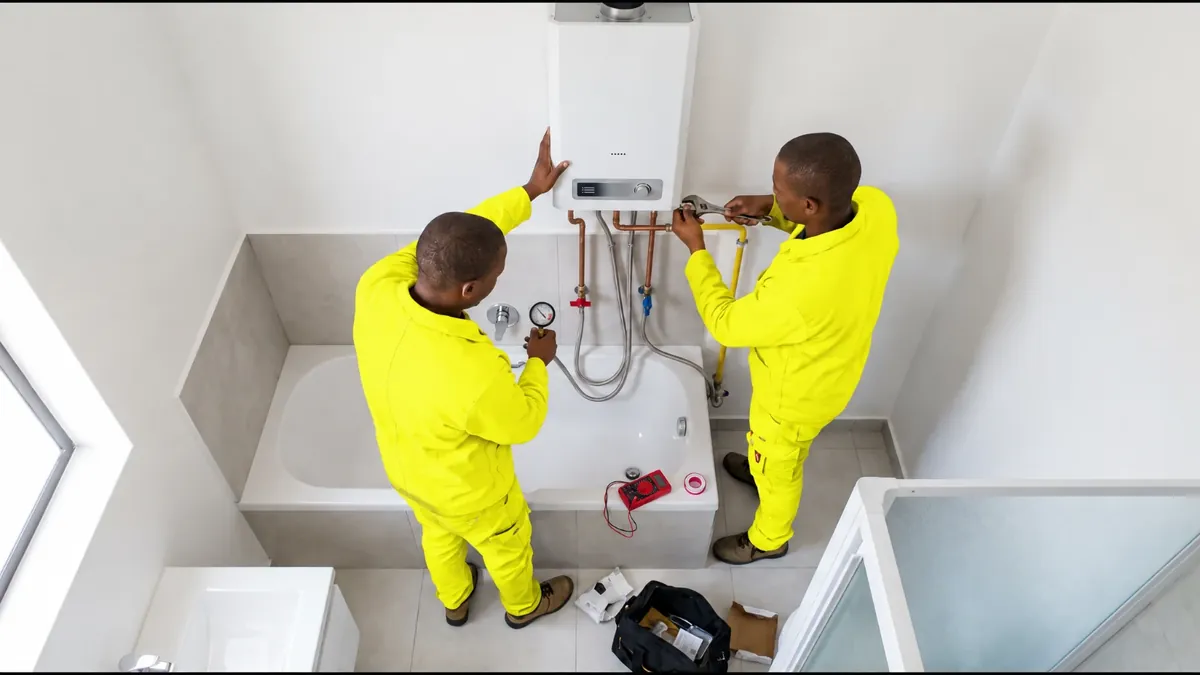
Gas Leak Detection South Africa is the job to call out the same day. A smell of gas, a bottle that empties faster than it should or a reading on a detector all mean the system is losing gas somewhere, and finding where is a pressure test followed by tracing joint by joint rather than guesswork. Say where you smell it and how old the pipework is, and compare callout and testing prices.
Super easy & fast
- Know what a pressure test should cost, so you never pay too much.
- Send the same symptom to several gas installers, and quotes come back fast.
- From LEADERR APPROVED providers, vetted and backed by many verified 5-star reviews. Peace of mind that the whole system is tested, not just the joint you found.
Say where you smell gas and get leak testing quotes.
Get the Best QuoteGas Leak Detection Prices
Ballpark figures so you can check a quotation.
| Item | Ballpark price |
|---|---|
| Callout and pressure test, per system | R650 - R1,800 |
| Leak tracing, per hour after the test | R450 - R1,200 |
| Regulator replaced | R450 - R1,500 |
| Hose replaced, approved type | R250 - R900 |
| Joint remade or fitting replaced | R350 - R1,200 |
| Section of pipe replaced, per metre | R400 - R1,100 |
| Buried pipe traced and exposed | R1,200 - R5,000 |
| Retest and certificate of conformity | R900 - R2,500 |
| After hours or same day callout | R1,000 - R2,800 |
Prices JUST UPDATED. Ballpark figures, rounded, excluding VAT. They reflect typical South African gas installation rates. They are not our prices or quotations, and no provider is bound by them. Gas work is quoted on the APPLIANCE and on the LENGTH AND ROUTE of the gas pipe that feeds it, so confirm what each quotation includes, such as the site visit, the appliance itself, the pipe, fittings and regulator, the flue and where it terminates, the cylinders and their cage, the certificate of conformity, and whether taking an old unit away is in the figure.
If You Can Smell Gas Now
- Close the bottle valve. At the cylinder, before anything else.
- Open doors and windows. Gas settles low, so ground level air matters.
- No flames, no switches. A light switch and a doorbell are both ignition sources.
- Get everyone out. If the smell is strong, leave and call from outside.
- Call an installer out. Do not relight anything until it has been tested.
How a Leak Is Found
- A pressure test. The system is sealed, pressurised and watched for a drop.
- The drop tells the size. A fast drop and a slow one are different searches.
- Section by section. Valves close off runs until the loss is isolated.
- Joint by joint. Leak solution and a detector on each fitting in that run.
- A retest afterwards. The repair is proved by holding pressure again.
Where Leaks Usually Are
- At the regulator. The commonest place, and the cheapest to fix.
- At a hose. Perished, past its date, or chafed where it passes a corner.
- At an appliance connection. Often a stove that has been pulled out and pushed back.
- At a joint that was moved. Anything disturbed by other trades.
- Rarely in the pipe itself. Buried pipe does fail, but it is the last place to look.
Get a price for your own system rather than a range.
Get the Best QuoteWhat Affects the Price
- How big the leak is. A fast loss is found quicker than a slow one.
- How much pipe there is. A full reticulation takes longer to isolate.
- Whether pipe is buried. Exposing a buried run is the expensive case.
- How urgent it is. Same day and after hours are priced differently.
- What the repair turns out to be. A regulator and a pipe section are far apart.
- Whether a CoC is wanted. Usually worth adding once the system holds pressure.
What to Include in Your Request
- The address. Suburb and town, so you reach installers who work there.
- Where you smell it. Inside, at the bottles, or only when an appliance runs.
- When it started. And whether anything was worked on recently.
- How old the installation is. Roughly is fine.
- What is connected. Geyser, hob, braai, fire, or all of them.
- Photos. The bottles, the regulator and any exposed pipework.
Before You Book the Test
- Say how strong the smell is. It decides whether this is same day or not.
- Ask what the callout covers. Test only, or the first hour of tracing.
- Ask for the test result. The pressure held, in writing.
- Ask about the retest. A repair is not proved until it holds again.
- Ask for the registration number. Only an authorised person may certify the fix.
- Ask about a detector. A low level alarm is inexpensive and worth having.
Gas Leak Detection FAQs
How much does gas leak detection cost in South Africa?
A callout and pressure test is commonly R650 to R1,800 for a household system, with tracing after that charged by the hour at around R450 to R1,200. The repair is separate: a regulator or a hose is usually R250 to R1,500 fitted, and a section of pipe R400 to R1,100 a metre. A same day or after hours callout carries a premium.
What should I do if I smell gas?
Close the valve at the cylinder, open doors and windows at ground level, and do not operate any switch or light any flame, because a switch is an ignition source. If the smell is strong, leave the building and call from outside. Do not relight anything until a registered installer has tested the system.
How is a gas leak found?
The system is sealed and pressurised and the gauge watched: a pressure drop proves a leak and the rate of the drop suggests its size. Valves are then closed to isolate sections until the loss is narrowed to one run, and each fitting in that run is checked with leak solution and a detector. The repair is proved by holding pressure again afterwards.
Why does my gas bottle empty so fast?
Sometimes it is a leak, and a pressure test settles that in an hour. Often it is not: a cold spell, more showers, an appliance running longer than you think, or a bottle that was not full when it was exchanged. A test is worth doing either way, because the one answer you do not want to guess at is the leak.
Do I need a new certificate after a leak repair?
If the pipework, the regulator or an appliance connection was altered, yes. It is also the sensible moment to get one, because the system has just been pressure tested and a registered person is on site, which is the cheapest a certificate ever gets.
A pressure test settles in an hour what guessing never will, and Gas Geyser Hub is the quickest way to get someone out to do one.
Related Services
Get the Best Quote, Fast
Client Reviews
Powered by leaderr