
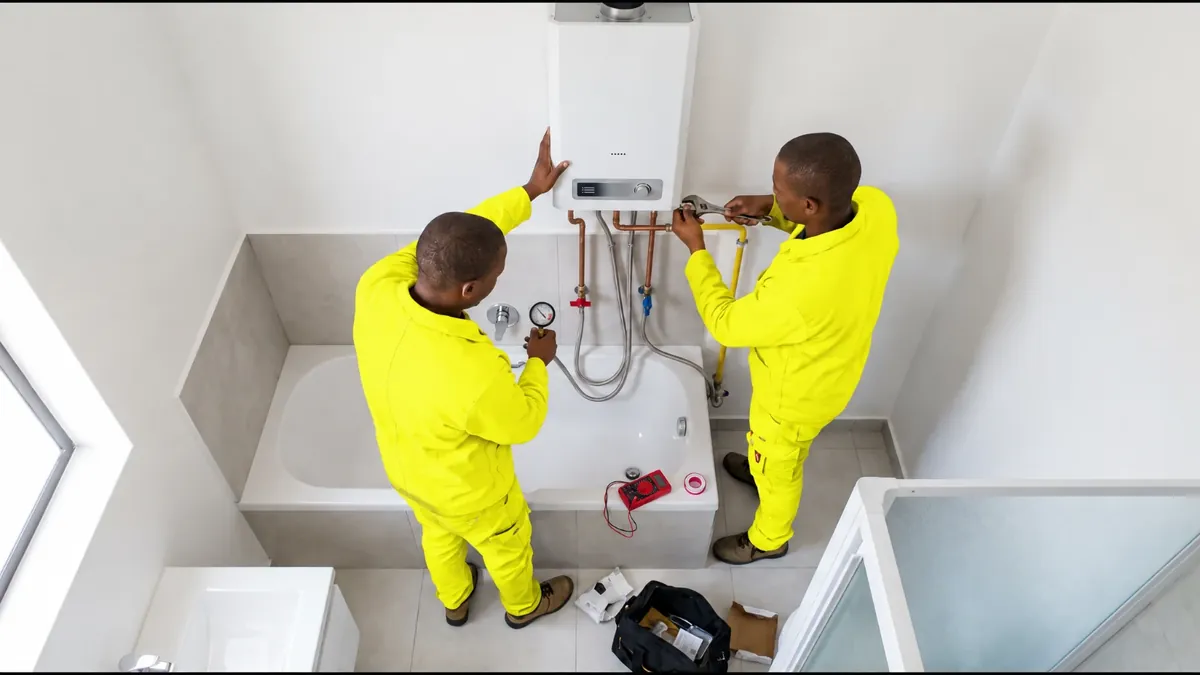
Why do you need the certificate?
Gas CoC Certificate South Africa is the piece of paper the rest of this site keeps mentioning: a registered, authorised person inspects the installation, pressure tests it, and signs to say it conforms. It is what a conveyancer asks for at transfer and what an insurer asks for after a fire, and it cannot be issued by someone who is not registered. Say what is installed and why you need the certificate, and compare inspection prices.
Super easy & fast
- See the inspection and any remedial work priced separately, so you never pay too much.
- Send the same installation to several gas practitioners, and quotes come back fast.
- From LEADERR APPROVED providers, vetted and backed by many verified 5-star reviews. Peace of mind that the person signing it is registered and authorised.
Say what is installed and get certificate quotes.
Get the Best QuoteGas CoC Certificate Prices
Ballpark figures so you can check a quotation.
| Item | Ballpark price |
|---|---|
| Inspection and certificate, standard house | R650 - R1,800 |
| Inspection with several appliances | R1,200 - R3,000 |
| Commercial kitchen or restaurant | R2,500 - R8,000 |
| Reinspection after remedial work | R450 - R1,200 |
| Replacing an unapproved hose | R250 - R900 |
| Regulator replaced | R450 - R1,500 |
| Relocating cylinders to comply | R1,500 - R6,000 |
| Flue corrected or rerouted | R900 - R4,000 |
| Certificate with a service, same visit | R1,400 - R3,400 |
Prices JUST UPDATED. Ballpark figures, rounded, excluding VAT. They reflect typical South African gas installation rates. They are not our prices or quotations, and no provider is bound by them. Gas work is quoted on the APPLIANCE and on the LENGTH AND ROUTE of the gas pipe that feeds it, so confirm what each quotation includes, such as the site visit, the appliance itself, the pipe, fittings and regulator, the flue and where it terminates, the cylinders and their cage, the certificate of conformity, and whether taking an old unit away is in the figure.
When You Need One
- Selling a property. A conveyancer will ask for it before transfer.
- After any new install. A geyser, a hob, a braai or a fire, each time.
- After altering the pipework. Moving bottles or adding an appliance counts.
- For an insurance claim. It is asked for at exactly the worst moment.
- When a tenant moves in. Many landlords renew it between tenancies.
What the Inspection Covers
- The cylinders. Position, distances, ventilation and how they are secured.
- The pipework. Material, route, support and protection where it passes through.
- A pressure test. The system sealed and held, with the result recorded.
- Each appliance. Connection, ventilation, clearances and the flue.
- The flame. Every burner lit and checked before anything is signed.
Common Reasons It Fails
- Bottles in the wrong place. Under a window, near a drain, or indoors.
- An unapproved hose. Wrong type, too long, or past its date.
- A sealed cupboard. A bottle boxed in with no low ventilation.
- A flue that goes nowhere. The serious one, and not a paperwork problem.
- Pipework disturbed by others. A builder or a tiler having moved a run.
Get a price for your own installation rather than a range.
Get the Best QuoteWhat Affects the Price
- How many appliances. Each one is inspected and lit.
- Household or commercial. A kitchen with a bank of burners takes longer.
- How accessible the pipe is. Buried or boxed in runs slow an inspection down.
- Whether anything fails. Remedial work is separate and so is the reinspection.
- How far they travel. A callout outside their normal area carries more.
- Whether it is urgent. A transfer deadline is usually a premium.
What to Include in Your Request
- The address. Suburb and town, so you reach practitioners who work there.
- What is installed. Geyser, hob, stove, braai, fire, or several.
- Why you need it. A sale, an insurer, a tenancy, or a new install.
- When you need it by. A transfer date changes what is possible.
- Whether there was one before. And roughly when it was issued.
- Photos. The bottles, the regulator and each appliance.
Before You Book an Inspection
- Ask for the registration number. And check it is current before they come out.
- Ask what happens if it fails. Remedial work and a reinspection, and what each costs.
- Ask whether they do the repairs. One visit is cheaper than two trades.
- Ask how long it takes to issue. On the day is normal, a week is not.
- Ask what the certificate covers. The installation as it stands, on that date.
- Ask about adding a service. Cheapest while they are already on site.
Gas CoC Certificate FAQs
How much does a gas certificate of conformity cost in South Africa?
A standard household inspection and certificate is commonly R650 to R1,800, rising to R1,200 to R3,000 where several appliances are installed. A commercial kitchen is usually R2,500 to R8,000. Remedial work needed to pass, and the reinspection afterwards, are quoted separately.
Who can issue a gas certificate?
Only a registered, authorised person. That registration is what makes the certificate worth anything to an insurer or a conveyancer, so ask for the number before the work rather than for the certificate after it. A cheap certificate from someone unregistered is worse than none, because it creates a false sense that the installation was checked.
Do I need a CoC when I sell my house?
Yes, where there is a gas installation. A conveyancer will ask for a valid certificate before transfer, and an old one is often not accepted if the installation has changed since. It is worth arranging early rather than in the last week, because a failed inspection means remedial work and a reinspection before the certificate can be issued.
What happens if the installation fails the inspection?
The practitioner will list what has to change, which is commonly bottles in the wrong position, an unapproved or out of date hose, a bottle boxed into a sealed cupboard, or a flue problem. Once the work is done the system is reinspected and the certificate issued. Many practitioners will do the remedial work themselves, which saves a second trade and a second visit.
How long is a gas certificate valid?
It certifies the installation as it was on the day it was inspected, so it stays good while nothing changes. Add an appliance, move the cylinders or alter the pipework and that work needs certifying, and most conveyancers and insurers will want a recent one rather than an old one. Many landlords renew it between tenancies for that reason.
A certificate is cheap next to the claim it protects, and Gas Geyser Hub is the quickest way to find a registered practitioner near you.
Related Services
Get the Best Quote, Fast
Client Reviews
Powered by leaderr