
What are you replacing?
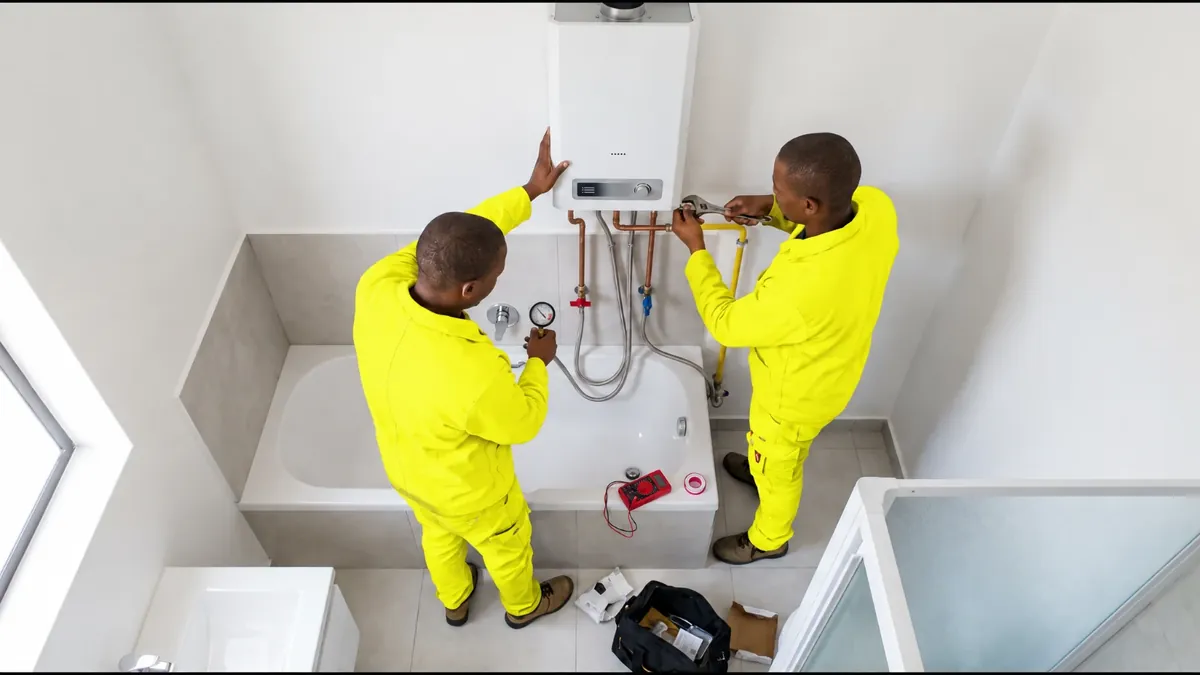
Gas Geyser Conversion South Africa is the changeover job: taking out an electric or solar cylinder and putting a gas unit in its place, so the house heats water only when a tap is open. It is more work than a straight installation, because the old cylinder has to come out, the plumbing has to be rerouted to a new position and the gas supply has to arrive where there was none. Say what is there now and where the bottles could stand, and compare quotations.
Super easy & fast
- See the removal, the pipework and the unit priced separately, so you never pay too much.
- Send the same changeover to several gas installers, and quotes come back fast.
- From LEADERR APPROVED providers, vetted and backed by many verified 5-star reviews. Peace of mind that the old cylinder is removed and the certificate issued.
Say what heats your water now and get conversion quotes.
Get the Best QuoteGas Geyser Conversion Prices
Ballpark figures so you can check a quotation.
| Item | Ballpark price |
|---|---|
| Remove and dispose of an electric cylinder | R900 - R3,000 |
| Reroute hot and cold to a new position | R1,500 - R6,000 |
| Gas unit supplied and fitted, 16 litres a minute | R9,000 - R19,000 |
| Gas pipework from the bottles, per metre | R350 - R900 |
| Cylinder cage supplied and fitted | R1,800 - R6,000 |
| Cylinders and regulator, two by 19 kg | R2,200 - R4,500 |
| Electrical isolation of the old circuit | R600 - R2,000 |
| Full changeover, one bathroom house | R12,000 - R22,000 |
| Full changeover, two or more bathrooms | R18,000 - R38,000 |
| Certificate of conformity | R650 - R1,800 |
Prices JUST UPDATED. Ballpark figures, rounded, excluding VAT. They reflect typical South African gas installation rates. They are not our prices or quotations, and no provider is bound by them. Gas work is quoted on the APPLIANCE and on the LENGTH AND ROUTE of the gas pipe that feeds it, so confirm what each quotation includes, such as the site visit, the appliance itself, the pipe, fittings and regulator, the flue and where it terminates, the cylinders and their cage, the certificate of conformity, and whether taking an old unit away is in the figure.
What the Changeover Involves
- The old cylinder out. Drained, disconnected and taken away.
- The electrics made safe. The circuit isolated or reused, by agreement.
- The gas unit sited. Usually an outside wall rather than the old ceiling space.
- Plumbing rerouted. Hot and cold brought to the new position.
- Gas brought to it. Bottles, regulator, pipe run and a certificate.
When It Pays and When It Does Not
- Hot water in bursts. The best case: nothing is kept hot between showers.
- A failed cylinder. Replacing one anyway makes the extra cost smaller.
- A long cold run. Moving the heat nearer the bathroom is its own gain.
- A working solar system. Often better kept, with gas as the backup.
- A flat with nowhere for bottles. The siting usually decides it, not the sums.
What to Decide Up Front
- Where the bottles stand. Settle this before anything else is priced.
- One unit or two. A second small unit can beat a long hot water run.
- What happens to the old space. A ceiling cylinder leaves a gap and a tray.
- Whether solar stays. Gas can back up a solar cylinder rather than replace it.
- Who removes what. The cylinder, the tray and the old pipework.
Get a price for your own house rather than a range.
Get the Best QuoteWhat Affects the Price
- Where the old cylinder is. A ceiling cylinder is more work than a wall one.
- How far the new position is. Plumbing and gas both have to reach it.
- Whether solar is involved. A solar cylinder is usually kept and backed up.
- How many bathrooms. One large unit or two smaller ones is a real fork.
- The bottle position. Nowhere obvious to put them is the usual snag.
- The certificate and removal. Both easy to leave out of a cheap quote.
What to Include in Your Request
- The address. Suburb and town, so you reach installers who work there.
- What heats the water now. Electric, solar, or a mix of the two.
- Where that cylinder sits. Ceiling, roof, a cupboard or outside.
- How many bathrooms. And whether two showers ever run at once.
- Where the bottles could go. An outside wall, a passage or a courtyard.
- Photos. The old cylinder, the proposed wall and the bottle spot.
Before You Commit to the Changeover
- Ask them to work out your saving. On your own usage, not on an average.
- Ask what happens to the old unit. Removal and disposal, or left for you.
- Ask about the cold water run. Distance to the tap decides the wait.
- Ask whether solar can stay. Keeping it and backing it up is often cheaper.
- Ask for the registration number. The certificate depends on it.
- Ask what the body corporate says. In a complex, the bottles are the hard part.
Gas Geyser Conversion FAQs
How much does it cost to change from electric to gas?
A full changeover in a one bathroom house commonly lands between R12,000 and R22,000, and R18,000 to R38,000 where there are two or more bathrooms. That covers removing the old cylinder, rerouting the plumbing, the gas unit, the pipework and the certificate. The cylinders themselves and a cage are usually separate again.
Will a gas geyser save me money?
It depends on your usage and on what you pay for electricity and for gas, so nobody can answer it with one number. What is generally true is that a gas unit heats only the water you draw while an electric cylinder keeps a tank hot whether you use it or not, so the saving is largest in a household that uses hot water in bursts. Ask an installer to work it out on your own figures.
Can I keep my solar geyser and add gas?
Often yes, and it is frequently the better answer. A gas unit can be plumbed to take over when the solar cylinder is not hot enough, which keeps the free heat you already paid for and removes the electric backup element that does most of the running cost. Ask for it to be quoted both ways.
Where does the new unit go?
Usually an outside wall rather than the old cylinder position, because an outdoor unit needs no flue and the bottles can stand near it. That means the hot and cold pipes have to be brought to the new spot, which is a real part of the price and the reason a changeover costs more than a straight installation.
What happens to the electrical circuit?
It is isolated or left capped by agreement, and in some houses it is reused for something else. Say in your request whether you want the circuit removed, left isolated or kept live, because installers price it differently and it is the kind of detail that turns up as an extra afterwards.
A changeover is a plumbing job and a gas job at once, and Gas Geyser Hub is the quickest way to get both halves priced together.
Related Services
Get the Best Quote, Fast
Client Reviews
Powered by leaderr